
- Groups of exempt goods and services in Schedule 1
- 13
- Standard VAT rate for what is not exempt
- 13%
- Customs code match needed for goods in Groups 1 to 11
- 8-digit
- Year of the VAT Act (B.S.)
- 2052
"Is this VAT exempt?" is one of the most common questions a Nepali business owner asks an accountant. It is also one of the questions most often answered from habit instead of from the law. A shopkeeper says that food is exempt. A landlord says that rent is exempt. A trainer says that education is exempt. Each statement is partly true, and the part that is not true is where tax assessments come from.
This article walks through Schedule 1 of the Value Added Tax Act, 2052, in plain language. It explains what the schedule covers, how to read it, how exempt differs from zero-rated, and what to check before you decide that a sale does not carry VAT. It is built from the text of the schedule itself. The edition we hold carries footnotes showing amendments by the Financial Acts of 2019, 2020 and 2021, so always confirm against the latest Finance Act and the Inland Revenue Department's notices before relying on any single item.
What "VAT exempt" actually means
VAT in Nepal is charged at a standard rate of 13% on taxable supplies of goods and services. The VAT Act then lists things that are taken out of that charge. Schedule 1, which the Act describes as relating to sub-section (3) of Section 5, is titled "List of goods and services exempted from tax".
Exempt means that the supplier does not charge VAT on the sale. It does not mean that the supplier has no VAT questions. The supplier still needs to know whether it has made only exempt sales, only taxable sales or a mix, because that affects registration, returns and the treatment of VAT paid on purchases. We return to that below.
The first rule to hold on to is simple: exemption must be found in the schedule. A good or service is not exempt because it feels essential, because it is cheap, because it is sold to individuals or because a competitor does not charge VAT on it. If it is not named in Schedule 1, or granted by a specific government decision, the safe assumption is that VAT applies.
The 13 groups at a glance
Schedule 1 is organised into groups. Here is what each group covers, in the words of the schedule, simplified.
| Group | Subject | What it covers |
|---|---|---|
| 1 | Basic agricultural products | Plants, flowers and many fresh vegetables and fruit, for example potatoes, tomatoes, onions, garlic and cabbages, listed by customs code |
| 2 | Goods of basic necessities | Salt, kerosene and other listed petroleum oils, and electricity production, distribution and transmission |
| 3 | Animals and animal products | Listed live animals and animal products |
| 4 | Not set out in the extract we hold | Check the Act in force |
| 5 | Medication and similar health services | Listed medicines, medical materials and health services |
| 6 | Education | Research in schools and universities, training by fully government-owned bodies, educational service by schools and universities, and their own canteen and hostel |
| 7 | Books, newspapers and published materials | Newsprint, printed books, newspapers and periodicals, printed music, printed calendars, and e-book, e-magazine and e-library charges |
| 8 | Artistic and art service | Arts, sculpture, architecture and similar handicrafts, and entrance fees to a library, museum, art museum and zoo |
| 9 | Public transportation and carriage | Air travel, public transport carrying passengers (except cable car), and carriage and cargo service, with exceptions |
| 10 | Commercial or professional service | Actors, players, writers, designers, translators and interpreters providing professional service, and supply of workers to foreign countries |
| 11 | Other goods and services | Residual items, including petroleum oil other than crude |
| 12 | Building and land | Purchase, sale and rental of buildings and land, except hotel, guest house and apartment services |
| 13 | Betting, casinos and lotteries | Activities relating to facilities for bets, gambling and lotteries |
We have deliberately kept the table to what the schedule says. Where it says "listed", the list runs to hundreds of customs codes, and the code decides the answer, not the everyday name of the product.
How to read Groups 1 to 11: the customs code rule
For goods in Groups 1 to 11, the schedule has a note that matters more than any single entry. Tax is exempt only if both the name and the description of the goods match the heading and sub-heading given in the schedule, which follows the eight-digit customs classification under four-digit headings. The same note says this does not stop goods from being exempt under a sub-heading called "others" where the goods are not named individually.
In practice this means three things.
Start from the customs code, not the product name. Two products that look alike to a customer can sit under different codes. One can be exempt and the other taxable.
Description matters as well as code. A good that is fresh and a good that is processed can fall under different headings. Fresh tomatoes appear in the schedule. A manufactured sauce made from them is a different product.
The Department can revise the reading. The same note says the Inland Revenue Department, in consultation with the Department of Customs, may alter and revise the interpretation of the goods and services that enjoy exemption and the Harmonized Code of commodities as necessary. A reading that was safe last year needs checking again.
A further note says the Government of Nepal may grant exemption where it considers it appropriate. That is a separate route. If you rely on a specific government exemption, keep a copy of the decision on file with the date.
Group by group: where people go wrong
Group 1 and 2: farm produce, salt, fuel, electricity
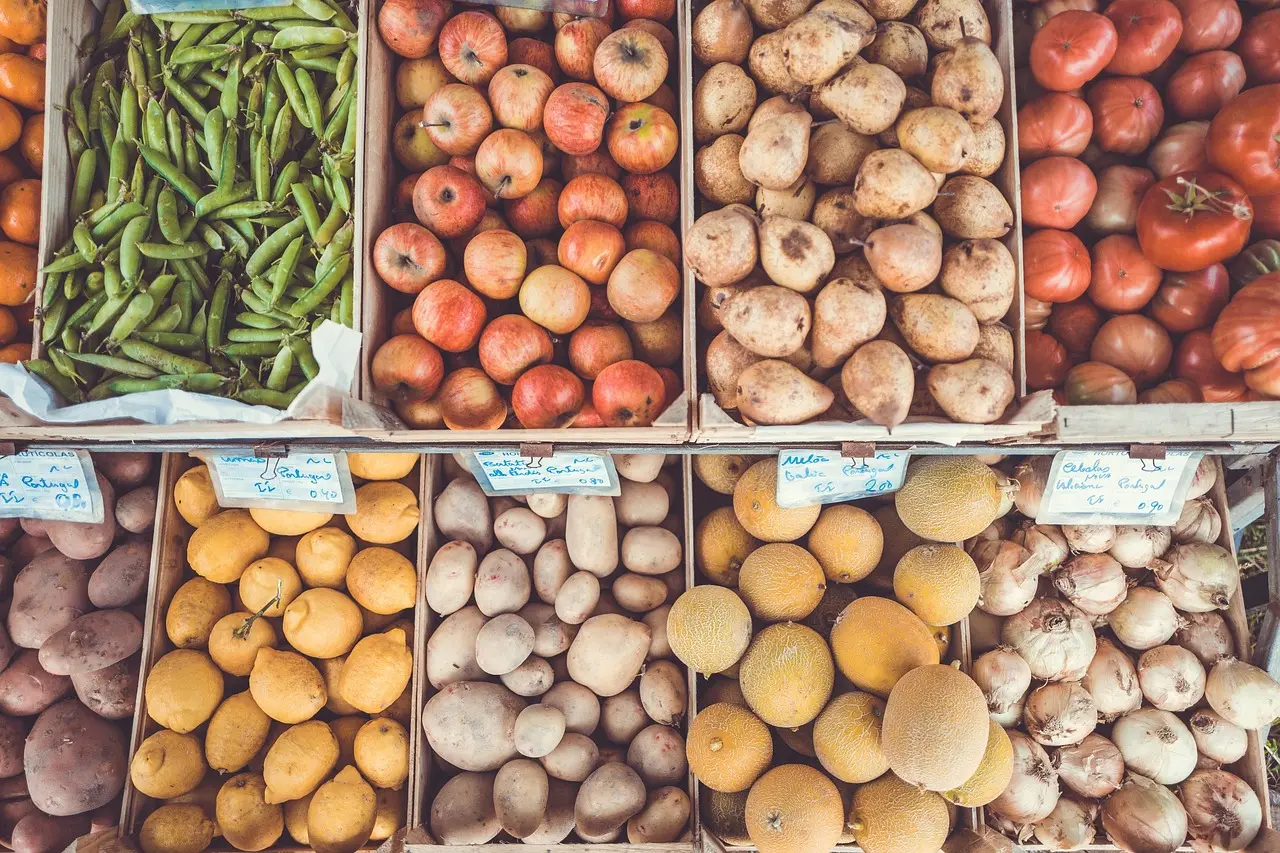
Fresh vegetables such as potatoes, tomatoes and onions, and flowers, plants and many fruit, appear in Group 1. The edge cases are processed goods. Once produce is cut, cooked, packed with other ingredients or turned into a different product, you are no longer looking at the same customs heading. Check the code of what you actually sell.
Group 2 lists salt, certain petroleum oils (including kerosene) and electricity production, distribution and transmission. A business that generates or distributes electricity should read that entry in the latest Act, because the exact wording of the entry decides which activities are covered.
Group 5: medicine and health
The schedule lists medicines and related materials by code and also covers similar health services. A clinic selling medicine and also selling cosmetics or general merchandise has two kinds of supply. The exempt part and the taxable part need separate treatment.
Group 6: education
Education is exempt only in the forms the schedule lists: research in schools and universities, vocational or professional training and refresher training by organisations fully owned by the Government of Nepal, educational service by schools and universities, and the canteen and hostel an educational institute runs by itself for its own purpose.
Notice what is missing. A private training company that is not a school or university and is not fully government-owned is not in the list as written. Many businesses assume that anything called training or education is exempt. The text does not say that. If your business sells courses, read the exact wording of Group 6 against your legal form and what you sell, and get a written view if it is close.
Group 7: books and newspapers
Printed books, brochures and leaflets, dictionaries and encyclopedias, newspapers and periodicals, printed music, printed calendars and newsprint are listed, along with e-books, e-magazines and e-library service charges. Advertising revenue earned by a newspaper is a different question from the sale of the newspaper itself, so do not assume one exemption covers every line of the income statement.
Group 8 to 10: art, transport and professional service
Group 8 covers arts, sculpture, architecture and similar handicrafts and related service, and the entrance fee to a library, museum, art museum and zoo.
Group 9 covers air travel, service from a machinery bridge, public transport carrying passengers except cable car, rent of carrier, carriage service other than carriage related to supply, and cargo service. The exceptions inside this group are doing a lot of work. The Inland Revenue Department's freight directive treats the import leg and the export leg of a cross-border consignment differently, which is why we wrote a separate article on VAT on import and export freight.
Group 10 lists an actor, player, writer, designer, translator or interpreter providing professional service institutionally or personally, and the service of supplying human resources to foreign countries. The list is specific. A professional service that is not named is not exempt just because it sounds similar.
Group 12: buildings and land, and the hotel exception
The purchase, sale and rental of buildings and land is exempt, except for services provided by a hotel, a guest house or an apartment, and by an entity carrying on business such as a hotel or guest house. A landlord who lets floors to ordinary tenants is on the exempt side. A landlord who is, in substance, running a guest house is not. The Supreme Court has examined who must prove which side of the line a letting falls on. See our article on VAT on building rent and the burden of proof.
Group 13: betting, casinos and lotteries
Activities relating to facilities provided for the organisation of bets or gambling, and lotteries, are listed as exempt. Other taxes can apply to these activities even where VAT does not. Check the rest of the law before treating the sector as tax-free.
Exempt, zero-rated and taxable: the difference that costs money
The three words are often mixed up, and the difference is financial.
Taxable at 13%: you charge VAT on the sale, and you can claim credit for VAT you paid on purchases used to make that sale, if you hold valid invoices.
Zero-rated: the sale carries VAT at 0%, and the supplier can usually recover the VAT it paid on its inputs. Exports are the usual example. In our article on freight, the export leg is treated differently from the import leg.
Exempt: the sale carries no VAT, and the supplier generally cannot claim credit for the VAT it paid on purchases used to make that exempt supply.
That last point is the one that surprises people. A business that makes only exempt supplies may find that the VAT it pays on rent, equipment and services becomes a cost it cannot recover. A business that makes both exempt and taxable supplies usually has to split its input VAT between the two. The exact rule for apportionment is in the VAT Act and the Rules, and the Supreme Court has dealt with how a proportionate credit must be justified. Read that provision, or take advice, before you claim a full credit on mixed purchases.
A worked illustration (illustrative, not a client case)
A trading company sells two product lines out of one shop.
Line A: fresh vegetables listed in Group 1. Sales in the month: NPR 10,00,000.
Line B: packaged and processed food that does not fall under a listed heading. Sales in the month: NPR 5,00,000.
Line A carries no VAT. Line B carries VAT at 13%, which is NPR 65,000 on NPR 5,00,000. The company also pays rent and buys a refrigerator. The rent and the refrigerator serve both lines, so part of the VAT paid on them relates to exempt sales. A claim for the whole input VAT, on the footing that the business is "mainly taxable", is the kind of claim that draws questions at assessment.
What would help the company: separate sales records for each line, a written basis for how shared costs are split, and a customs-code check for every product at the point of listing it in the billing system.
A checklist before you treat something as exempt
Find the item or service in Schedule 1 by name, or find a specific government decision.
For goods, match the eight-digit customs code and the description, not just the everyday name.
Read any exception written inside the entry, such as the hotel carve-out in Group 12 or the cable car carve-out in Group 9.
Confirm the entry in the latest Finance Act, since the edition we hold shows amendments in 2019, 2020 and 2021.
Check Inland Revenue Department notices and the customs tariff for any reinterpretation.
Decide whether you make exempt supplies only, or a mix, and how you will split input VAT.
Write down the basis for your treatment and date it. If an officer asks, a dated note is far stronger than a memory.
If the item is close to the line, ask for a written view before the return is filed, not after the notice arrives.
Our view
In our experience, businesses lose more money by wrongly assuming exemption than by wrongly assuming tax. The reason is not that officers are unfair. It is that exemption is an exception, and the person claiming an exception has to be able to show where it sits. A short file note naming the Schedule 1 group, the customs code and the date you checked will do more for you in a review than any amount of explanation after the fact.
We also think the system would work better with plainer lists. A schedule that depends on eight-digit codes is hard for a shopkeeper to apply. Until that changes, the practical answer is to build the code check into the item set-up in your billing software, so the question is answered once, when the product is created, and not again for every invoice.
Frequently asked
Is food VAT exempt in Nepal?
Only the food items named in Schedule 1, such as listed fresh vegetables, salt and other listed goods, matched by customs code. Processed and packaged food needs its own check.
Is rent subject to VAT in Nepal?
Rent of buildings and land is exempt under Group 12, except for services provided by a hotel, a guest house or an apartment business. See our article on building rent for the burden of proof.
Is education VAT exempt?
Educational service provided by schools and universities is exempt, along with certain training by fully government-owned bodies and a school's own canteen and hostel. A private training business that is not a school or university should check the wording of Group 6 carefully.
What is the difference between VAT exempt and zero-rated?
Exempt sales carry no VAT and generally give no right to claim input credit. Zero-rated sales carry VAT at 0% and usually allow recovery of input VAT. Exports are the usual zero-rated example.
Do I need to register for VAT if everything I sell is exempt?
That depends on the registration rules and on whether you also make taxable supplies. See our article on VAT registration in Nepal and confirm your position before assuming you are outside the system.
Can the exempt list change?
Yes. The edition we hold shows amendments through the Financial Acts of 2019, 2020 and 2021, and the Department may revise how goods and services are read. Always check the latest version.
Sources and limits
This article reads the text of Schedule 1 to the Value Added Tax Act, 2052 (relating to sub-section (3) of Section 5), in the edition showing amendments by the Financial Acts of 2019, 2020 and 2021. We did not review later Finance Acts, so any change after that is not reflected here. Group 4 was not set out in the extract we read. The treatment of input credit for exempt supplies and the apportionment rule should be confirmed against the VAT Act and Rules in force.
General information only, not advice.


